
Black and grey tattoos have a distinctive visual character. Instead of relying on vibrant colors, this approach uses black ink, different shades of grey, contrast, and shading to create artwork with depth, dimension, and detail.
From realistic portraits and wildlife to religious imagery, ornamental patterns, and abstract compositions, black and grey tattooing offers a wide range of artistic possibilities.
For anyone considering a black and grey tattoo in Bali, understanding how this style works can make the design process more meaningful. The right approach depends on the subject, the level of detail, the size of the artwork, and how the composition fits the body.
Whether you already have a design in mind or are exploring possibilities, this guide will help you understand what makes black and grey tattoos distinctive and what to consider before your appointment.
Quick Answer
A black and grey tattoo uses black ink and a range of lighter tones to create artwork through contrast, shading, and negative space. It can be used for realistic portraits, wildlife, ornamental designs, lettering, and many other subjects.
Black and grey may be a good choice if you prefer artwork that emphasizes depth, texture, and tonal variation rather than vibrant color. However, the right design depends on your preferred visual style, tattoo placement, size, and the level of detail involved.
Key Takeaways
- Black and grey tattoos use tonal variation, shading, and contrast instead of a broad color palette.
- The style can be applied to realism, portraits, wildlife, ornamental artwork, and other designs.
- Black and grey tattooing is not the same as realism; realism is an artistic approach that can use either black and grey or color.
- Contrast and negative space help define the composition and visual depth.
- Very detailed artwork may require enough space to remain readable on the body.
- Placement, sun exposure, individual skin characteristics, and aftercare can influence how tattoos appear over time.
- Reviewing an artist’s relevant portfolio is important when choosing who should create your tattoo.
- A consultation can help determine how your idea, references, size, and placement work together.
What Is a Black and Grey Tattoo?
A black and grey tattoo is artwork created primarily through black ink and variations of grey.
Rather than using multiple colors to separate different elements, the artist develops the composition through differences in darkness, lightness, and shading.
Some designs feature strong black areas and dramatic contrast. Others use soft transitions and subtle grey tones to create a more delicate appearance.
The technique can be adapted to many artistic directions, which is why black and grey tattooing should not be viewed as one fixed visual style.
A realistic portrait, an ornamental pattern, and a minimalist illustration can all use black and grey while producing very different results.
How Do Black and Grey Tattoos Work?
Black and grey tattooing depends on how the artist organizes light and dark values within the design.
The relationship between solid black, midtones, lighter areas, and untouched skin can influence how the finished artwork appears.
Black Ink and Grey Shading
Black ink provides the foundation for many black and grey compositions.
Artists may create lighter values through techniques involving diluted black ink, often called greywash, or other approaches to controlling tonal density.
The chosen technique depends on the artist’s process and the intended visual effect.
Contrast and Depth
Contrast helps distinguish important parts of the tattoo.
Darker areas can create emphasis, while lighter sections help define transitions, texture, and dimensional relationships.
A composition with carefully planned contrast can feel dramatic even without colorful elements.
Negative Space
Negative space refers to areas intentionally left without ink or used as lighter visual space within the composition.
It can help separate elements, create highlights, and prevent the artwork from becoming unnecessarily crowded.
Smooth Shading Transitions
Shading allows an artist to develop gradual changes between darker and lighter areas.
These transitions can be particularly important in portraits, wildlife, and other designs where texture and dimension contribute to the overall effect.
However, not every black and grey tattoo needs smooth realism-style shading. Some designs intentionally use sharper boundaries and graphic contrast.
What Styles Work Well With Black and Grey Tattoos?
One of the advantages of black and grey tattooing is its versatility.
The approach can support many subjects and visual styles, from highly detailed artwork to bold, simplified compositions.
Black and Grey Realism
Black and grey realism aims to represent subjects with lifelike qualities through tonal variation, texture, and carefully controlled shading.
Common subjects include portraits, animals, natural objects, and imagery inspired by photography.
Because realism relies heavily on proportion, contrast, and the relationship between light and shadow, the artist’s experience with the intended subject matters.
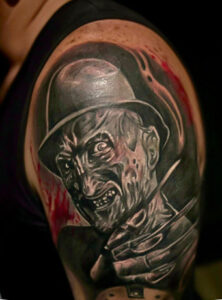
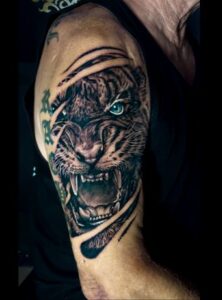

If you are specifically interested in realistic artwork, explore our guide to realism tattoos in Bali for a closer look at this artistic direction.
Black and Grey Portrait Tattoos
Portrait tattoos can represent family members, loved ones, public figures, or meaningful characters.
Some portraits aim for photographic detail, while others use a more illustrative approach.
Reference quality, facial proportions, size, and composition all influence how the artwork can be translated into a tattoo.


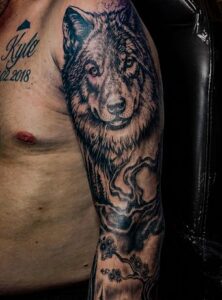
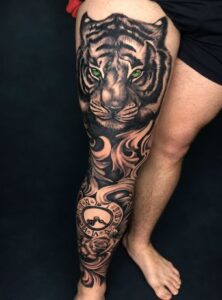
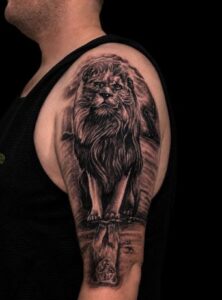
Black and Grey Wildlife Tattoos
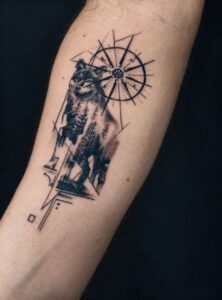
Animals are popular subjects for black and grey compositions because shading can emphasize fur, feathers, facial structure, and movement.
A wolf, lion, eagle, or another animal can be represented through realism, illustration, or a more graphic design.
The subject alone does not determine the style. The artistic interpretation matters just as much.
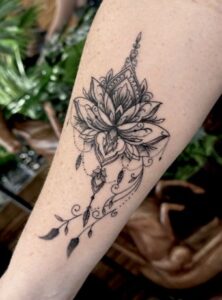
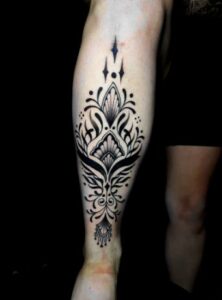
Black and Grey Ornamental Tattoos
Ornamental tattoos use decorative patterns, shapes, symmetry, and repeating elements.
Black and grey can create visual depth within these patterns while allowing the composition to remain cohesive.
Some designs rely on bold black sections, while others combine delicate lines with subtle shading.

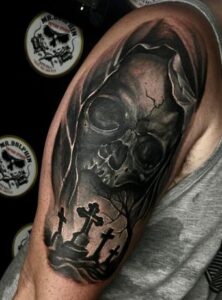
Black and Grey Religious and Symbolic Tattoos
Religious, spiritual, and symbolic subjects can also be interpreted through black and grey artwork.
These may include figures, objects, architectural elements, or meaningful symbols.
When choosing culturally or spiritually significant imagery, it is worth understanding the subject and its context rather than selecting it solely for its appearance.

Black and Grey Illustrative Tattoos
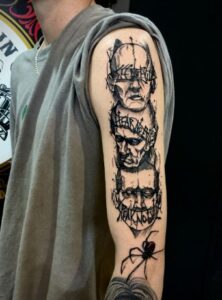
Illustrative black and grey tattoos can draw inspiration from drawing, engraving, sketching, and other visual-art traditions.
These designs may use linework, texture, stippling, shading, or graphic contrast.
Unlike realism, illustrative work does not necessarily aim to reproduce a photographic appearance.
What Is the Difference Between Black and Grey Tattoos and Blackwork?
Although both approaches can use black ink, they are not identical.
Blackwork often emphasizes solid black areas, graphic shapes, bold patterns, or strong visual contrast.
Black and grey tattooing places greater emphasis on tonal variation and the relationship between different shades.
However, the categories can overlap. An artist may combine solid black elements with grey shading in a single design.
The most useful distinction is not simply the ink color, but how the artist builds the composition.
Black and Grey vs Color Tattoos: Which Should You Choose?
Neither approach is automatically better.
Black and grey may appeal to people who prefer a more restrained palette, dramatic shadows, or artwork that emphasizes texture.
Color tattoos provide opportunities to work with different hues, saturation, and palette combinations.
The same subject can produce very different results depending on the approach.
For example, a rose tattoo might use soft grey shading to emphasize its form, while a color version could use contrasting hues to create a different visual character.
If you are comparing the two approaches, our guide to color tattoos in Bali explores the broader possibilities of vibrant and custom color artwork.
Are Black and Grey Tattoos Better for Certain Skin Tones?
Black and grey tattoos can be created on a wide range of skin tones.
However, the appearance of ink, contrast, and subtle tonal differences can vary depending on individual skin characteristics.
Very light grey values may appear differently from stronger black areas. The artist should therefore consider contrast, line weight, composition, and the intended level of detail for the individual client.
There is no single shading formula that works identically for everyone.
A useful consultation considers how the design can achieve an appropriate balance between darker areas, lighter values, and readable details.
Do Black and Grey Tattoos Fade Over Time?
All tattoos can change in appearance over time.
Black and grey tattoos are no exception.
Sun exposure, individual skin characteristics, placement, friction, tattooing technique, and aftercare can all influence how artwork appears as it ages.
Subtle shading and very small details may change in appearance, which is one reason why composition and contrast deserve attention during the design process.
It is also important to distinguish between normal changes in a tattoo’s appearance and problems that require professional attention.
Good aftercare supports the healing process, but it does not guarantee that a tattoo will remain visually unchanged forever.
For practical care guidance while travelling, read our tattoo aftercare guide for Bali.
Does Tattoo Size Matter for Black and Grey Artwork?
Yes. Size can influence how much detail can be included while keeping the composition visually readable.
A small black and grey tattoo may work beautifully when the design uses simple forms and a clear arrangement of elements.
Highly detailed portraits, wildlife, or complex scenes may need additional space to accommodate shading, texture, and transitions.
Trying to place too much information into a very small area can make the design feel crowded.
This does not mean that every black and grey tattoo needs to be large. Instead, the design and size should be developed together.
Where Should You Place a Black and Grey Tattoo?
Placement can influence the appearance and composition of black and grey artwork.
Different body areas offer different shapes, proportions, and amounts of available space.
For example, a vertical composition may suit an arm or lower leg, while a wider design might be developed for the upper back or another broader area.
Body movement, curvature, friction, and sun exposure can also become relevant considerations.
Rather than choosing placement only after the design is completed, discuss the two decisions together.
Can Black and Grey Tattoos Be Combined With Other Styles?
Yes. Black and grey is a tonal approach that can be combined with several artistic styles.
An artist may use fine line details within a larger black and grey composition, incorporate ornamental patterns into realistic artwork, or combine illustrative linework with soft shading.
However, combining styles requires a coherent design approach.
The objective should not be to include as many techniques as possible. Instead, each element should contribute to the overall composition.
For readers interested in delicate linework, our fine line tattoo guide explores a different approach to tattoo detail and visual character.
How Much Does a Black and Grey Tattoo Cost in Bali?
There is no single price that applies to every black and grey tattoo.
The cost can depend on several factors, including design complexity, size, placement, the level of detail, and the work involved in creating the artwork.
A small, simple design and a large, highly detailed composition may require very different approaches.
Rather than relying on generic price estimates, it is more useful to share your idea, references, approximate size, and preferred placement with the studio.
Our guide to tattoo prices in Bali explains the main factors that can influence a quote.
How Do You Choose an Artist for a Black and Grey Tattoo?
Choosing an artist involves more than finding a photograph you like.
Review the artist’s portfolio for work that is relevant to your intended style.
If you want a realistic portrait, look for comparable portrait work. Wildlife designs deserve attention to the artist’s treatment of texture and anatomy, while ornamental artwork requires a different evaluation of composition and pattern.
Consider the consistency of the portfolio rather than relying on one impressive example.
Healed photographs can provide additional context when they are available.
Communication also matters. An artist should be able to discuss the design, explain relevant considerations, and help you understand how your idea can be developed.
Our guide to choosing the right tattoo artist in Bali explains how to evaluate portfolios, style compatibility, and the consultation process.
What Should You Bring to a Black and Grey Tattoo Consultation?
You do not need a completely finished design before contacting a tattoo artist.
However, a few useful details can make the conversation more productive.
- Reference images that show the visual direction you prefer.
- A description of the subject or personal meaning behind the tattoo.
- An approximate size or the body area you are considering.
- Examples of shading, contrast, or artistic details that appeal to you.
- Information about any existing tattoo that may affect the project.
References should communicate your preferences rather than require an exact reproduction of another person’s tattoo.
If you want artwork developed around your own concept, our custom tattoo guide explains how personal ideas and visual references can become part of an original design.
Getting a Black and Grey Tattoo at MR Dolphin Tattoo in Kuta, Bali
MR Dolphin Tattoo has been part of the tattoo scene in Kuta since 1975.
If you are considering black and grey artwork, you can begin by sharing your idea and discussing the subject, design references, size, and placement with the studio.
Whether your preference is realism, illustration, ornamental work, or another artistic direction, reviewing relevant portfolio examples is an important part of determining the right approach.
The consultation should help clarify how your concept can be developed and which artist is appropriate for the project.
Rather than choosing a design based only on its appearance online, consider how the artwork will work on your body and whether its style matches your personal preferences.
Frequently Asked Questions About Black and Grey Tattoos in Bali
A black and grey tattoo uses black ink and tonal variation to create artwork through shading, contrast, and negative space. The approach can be used for realism, portraits, wildlife, ornamental designs, and many other subjects.
No. Black and grey describes the use of tonal values, while realism describes an artistic approach that aims to represent subjects with lifelike qualities. Realism tattoos can use black and grey or color.
There is no universal rule that one approach always lasts longer. Tattoo appearance can change over time depending on the design, ink application, placement, sun exposure, individual skin characteristics, and other factors.
Black and grey tattoos can be created on different skin tones. The artist should consider contrast, shading, line weight, and the design’s level of detail for the individual client.
Yes. Small black and grey tattoos can work well, especially when the design uses a clear composition and an appropriate level of detail. More complex artwork may require additional space.
Ink color alone does not determine how painful a tattoo will feel. The experience can vary depending on placement, session duration, technique, individual sensitivity, and the work required for the design.
Pricing depends on the size, complexity, placement, detail, and scope of the artwork. Sharing your idea and references with the studio is the best starting point for obtaining a project-specific quote.
Yes. You can bring sketches, photographs, reference images, or a description of your idea. An artist can discuss how the concept may be adapted into tattoo artwork that suits the intended size and placement.
Choosing Black and Grey Tattoo Art That Feels Right for You
Black and grey tattooing offers a broad range of artistic possibilities.
Its appeal comes from the relationship between light and shadow, contrast, texture, and composition rather than the use of a colorful palette.
Whether you prefer a detailed portrait, a wildlife design, ornamental artwork, or a simpler illustration, the right result depends on how the idea is developed for your body.
Take time to consider the subject, level of detail, placement, and visual character you want the tattoo to express.
If you already have a concept in mind, share your black and grey tattoo idea with MR Dolphin Tattoo in Kuta, Bali and discuss the design possibilities with an artist.