
Choosing a tattoo artist in Bali is not simply about finding someone who can tattoo the design you have in mind.
The more important question is whether that artist is the right match for your particular idea.
Tattoo artists can develop different strengths, visual preferences and ways of approaching design. An artist whose portfolio is filled with bold color work may not necessarily be the person you would choose for every fine line concept. Likewise, an artist experienced with cover-ups needs to think differently from someone creating artwork on untouched skin.
That is why choosing the right artist should begin with your tattoo, not with a generic ranking of who is “best.”
Look at the artist’s actual work. Pay attention to the styles they regularly create, how they handle designs similar to your idea and how clearly they communicate during consultation.
The goal is not to find the best tattoo artist for everyone.
It is to find the right tattoo artist for your tattoo.
Quick Answer
To choose the right tattoo artist in Bali, start by defining the style and type of tattoo you want. Then review artists’ portfolios for relevant work, examine their approach to composition and detail, discuss your idea during consultation and make sure the artist understands your expectations.
Do not choose an artist based only on follower counts, one impressive photograph or the lowest price.
The strongest match is usually an artist whose experience and portfolio align naturally with the tattoo you want to create.
Key Takeaways
- There is no single tattoo artist who is automatically the right choice for every tattoo style.
- Start with your tattoo idea before deciding which artist fits the project.
- Look for repeated evidence of relevant work within an artist’s portfolio.
- A portfolio should be evaluated for style compatibility, not simply visual popularity.
- Healed tattoo photographs can provide additional context when available.
- Reference images are useful for explaining what you like without requesting an exact copy.
- Good communication during consultation matters, especially for custom tattoos.
- Cover-ups require different considerations from tattoos on previously untattooed skin.
- Price should be considered alongside design, complexity and the artist-project match.
- The right artist should help turn your idea into a design suited to your body and chosen placement.
Start With the Tattoo You Actually Want
Before searching for an artist, define the tattoo as clearly as you can.
You do not need to know every detail.
However, it helps to identify the basic direction.
Ask yourself:
- What is the main subject?
- Do I want color or black and grey?
- Do I prefer bold or delicate artwork?
- Is the design realistic, illustrative, abstract or something else?
- Is this a completely new tattoo or a cover-up?
- Approximately how large should it be?
- Where do I want it on my body?
- Do I have reference images?
- Is there a personal story behind the tattoo?
These answers begin to define the type of artist you should look for.
If you only search for “the best tattoo artist in Bali,” you are asking a very broad question.
If you know that you want a colorful botanical tattoo, a black and grey portrait or a cover-up of an existing tattoo, your search becomes much more meaningful.
Does Tattoo Style Matter When Choosing an Artist?
Yes.
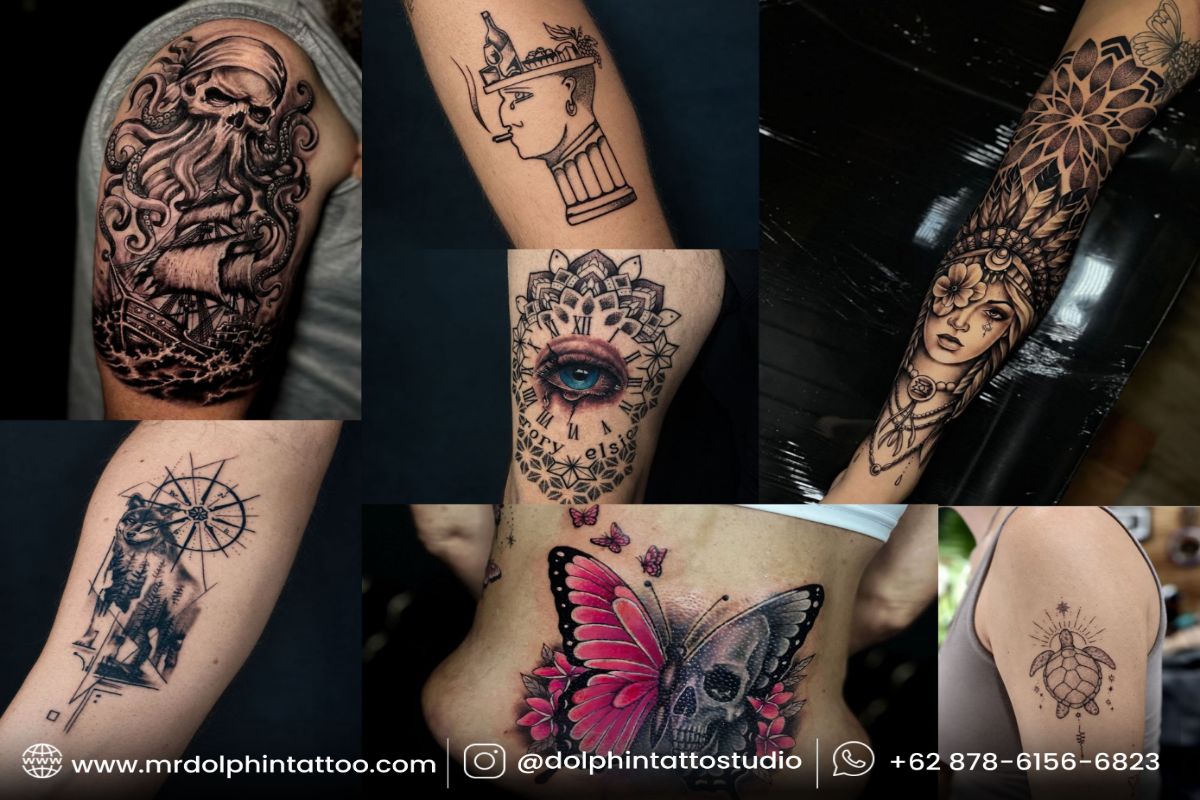
Tattooing includes many different artistic approaches.
Depending on the studio and artist, portfolios may contain work involving:
- fine line;
- black and grey;
- realism;
- color;
- watercolor;
- traditional-inspired designs;
- illustrative artwork;
- geometric compositions;
- ornamental work;
- cover-ups;
- and combinations of different approaches.
An artist does not need to work exclusively in one style to be capable of creating good tattoos.
However, if your project depends heavily on a particular visual technique, it makes sense to look for evidence that the artist understands that kind of work.
For example, someone considering a watercolor tattoo in Bali should pay attention to how an artist handles colour, transitions and painterly effects.
A client interested in a color tattoo in Bali may want to examine the artist’s use of palette, contrast and composition.
The tattoo idea should help guide the artist selection.
Look at the Artist’s Portfolio, Not Just the Profile
An artist’s portfolio is one of the most useful tools for evaluating whether their work matches your idea.
Do not stop after seeing one impressive tattoo.
Look deeper.
Ask:
Does the portfolio repeatedly show the type of work I am considering?
How does the artist handle composition?
Do details look intentional?
Does the work feel consistent?
Can I find tattoos with a similar level of complexity to my idea?
Do I like the artist’s visual interpretation of subjects?
A portfolio should help you understand how an artist thinks visually.
This is different from simply asking whether the tattoos are “good.”
You are trying to determine whether the artist’s work feels compatible with what you want.
One Great Tattoo Does Not Define an Entire Portfolio
Social media naturally highlights eye-catching work.
A single photograph may receive thousands of views because the subject, lighting, client or composition is particularly striking.
That does not necessarily tell you everything about the artist.
Instead, look for patterns.
If you want watercolor work, are there multiple relevant examples? For color tattoos, look at how the artist approaches different palettes. When considering a cover-up, check whether the portfolio shows transformations of existing tattoos.
Should You Look for Healed Tattoo Photos?
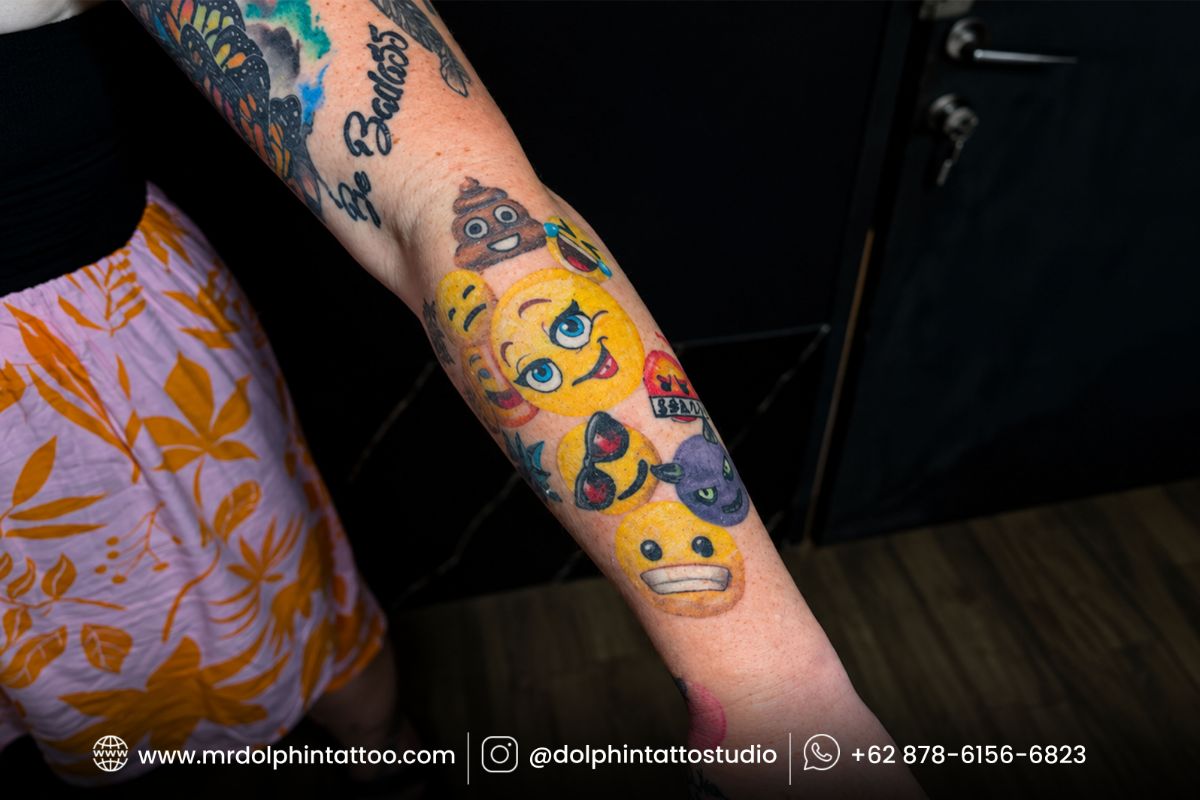
Healed tattoo photographs can be useful when they are available.
A freshly completed tattoo is photographed immediately after the skin has been worked, while a healed tattoo shows the artwork at a different stage.
Seeing both can provide additional context about an artist’s work.
However, not every portfolio will contain a healed photograph for every tattoo.
The absence of one healed image does not automatically tell you whether an artist is right or wrong for your project.
Treat healed work as another useful piece of information rather than a single pass-or-fail test.
If it matters to your decision, ask whether the artist or studio has relevant healed examples they can show you.
Pay Attention to Work Similar to Your Idea
Similarity does not mean finding the exact tattoo you want.
Suppose your idea is a colorful bird surrounded by botanical elements.
The artist does not need to have tattooed that exact bird before.
Instead, you might look for evidence of:
- color handling;
- feathers;
- botanical elements;
- composition;
- movement;
- and tattoos of a comparable scale.
Those examples collectively tell you more about the artist’s suitability.
The same principle applies to other concepts.
For a portrait, examine relevant realism work. Delicate designs require closer attention to fine details and linework. If you are planning a cover-up, look for actual examples involving existing tattoos.
Evaluate the skills relevant to the project rather than searching for an identical finished tattoo.
Understand the Difference Between Inspiration and Copying
Reference images are valuable.
You can bring tattoos you found online, illustrations, photographs, paintings or even several unrelated images that communicate different parts of your idea.
Perhaps you like:
- the composition of one tattoo;
- the colors of a painting;
- the flower in a photograph;
- and the placement of another piece.
Explain those preferences.
That gives the artist information they can use when developing your design.
It is much more useful than simply asking:
“Can you copy this exactly?”
A custom tattoo can take inspiration from references while becoming artwork developed around your own concept, body and placement.
Our guide to custom tattoos in Bali explains this process in greater detail.
Consider the Artist’s Approach to Custom Design
If your tattoo has personal meaning, custom design compatibility becomes particularly important.
Some clients arrive with a detailed concept.
Others arrive with only a story.
You might know that the tattoo should represent a particular person, experience or period of your life without knowing exactly what image should express it.
In that situation, consultation becomes part of the creative process.
The artist needs to understand what matters to you and identify which elements can translate effectively into tattoo artwork.
A productive discussion might cover:
- the story behind the idea;
- visual references;
- preferred style;
- size;
- placement;
- colors;
- elements you definitely want;
- and elements you want to avoid.
The right artist-project match should make this process clearer, not more confusing.
Communication Matters
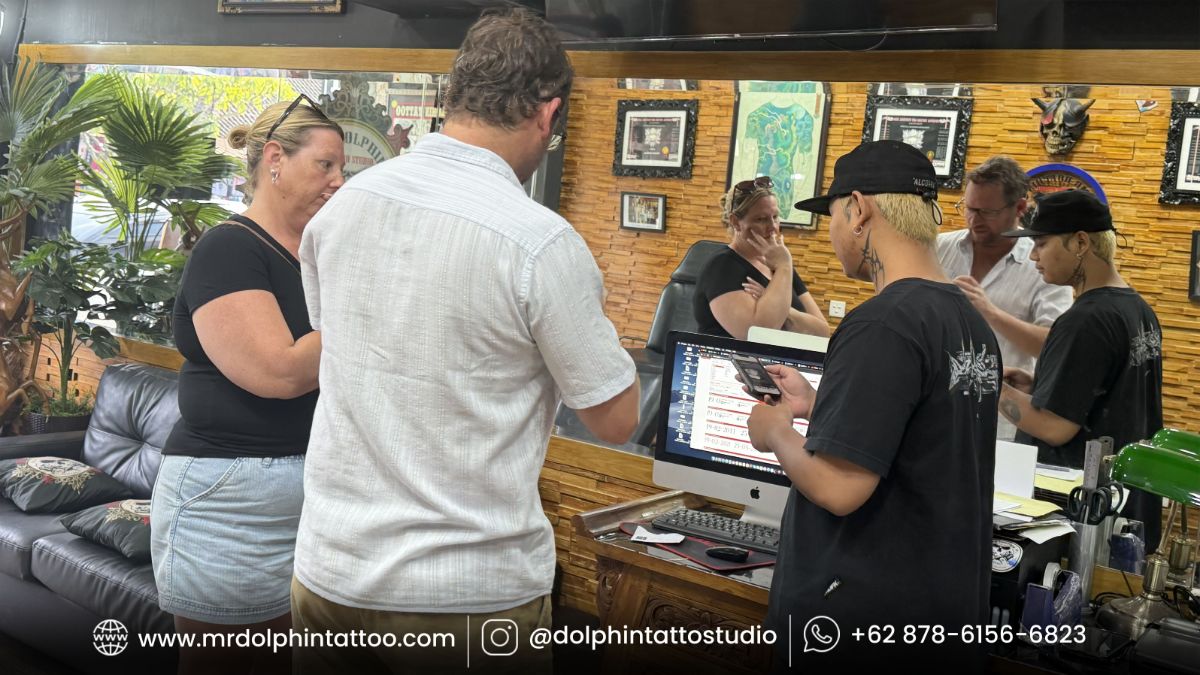
Artistic ability is important, but so is communication.
You should be able to explain your idea and ask reasonable questions.
Likewise, an artist may explain why part of the concept could benefit from adjustment.
For example, the artist might suggest changing:
- scale;
- placement;
- composition;
- amount of detail;
- orientation;
- or the relationship between several elements.
That does not automatically mean your original idea is being rejected.
Tattoo artwork has to function on the body rather than only on a screen.
A useful consultation creates room for both sides of that conversation.
You bring the meaning and preferences.
The artist brings tattoo-specific design experience.
The final direction develops between them.
What Questions Should You Ask a Tattoo Artist?
You do not need to conduct an interview with dozens of questions.
Focus on information that helps you understand the project.
Useful questions may include:
- Have you worked on tattoos in this style before?
- Can I see relevant examples?
- What size would suit this amount of detail?
- Does this placement work with the design?
- How would you approach these reference images?
- Can these elements be combined into one composition?
- What should I prepare before the appointment?
- What should I know about aftercare and healing?
If it is a cover-up, you may also need to ask what is realistically possible with the existing tattoo.
Good questions are specific to your tattoo rather than generic tests designed to catch an artist out.
Should You Choose a Tattoo Artist Based on Instagram Followers?
Follower count can tell you that an artist has an audience.
It does not automatically tell you that the artist is the right person for your tattoo.
Social media popularity can be influenced by many things beyond tattoo style compatibility.
Instead, use social platforms as a portfolio discovery tool.
Look at the work itself.
Ask whether the artist repeatedly creates tattoos relevant to your project.
A smaller account with exactly the portfolio you are looking for may be a better match than a much larger account whose work follows a completely different direction.
Popularity and suitability are not the same thing.
Should Price Decide Which Tattoo Artist You Choose?
Price is naturally part of the decision.
However, it should not be evaluated in isolation.
Tattoo pricing can be influenced by factors such as:
- size;
- complexity;
- placement;
- detail;
- design requirements;
- and the work involved in the project.
That is why comparing artists only through a single number can be misleading.
Our guide to tattoo prices in Bali explains the factors that can influence a quote and why discussing the actual tattoo is more useful than relying on generic price assumptions.
Your objective should not simply be to find the cheapest artist.
It should be to understand what you are booking and whether the artist is a suitable match for the work.
Choosing an Artist for a Cover-Up Is Different
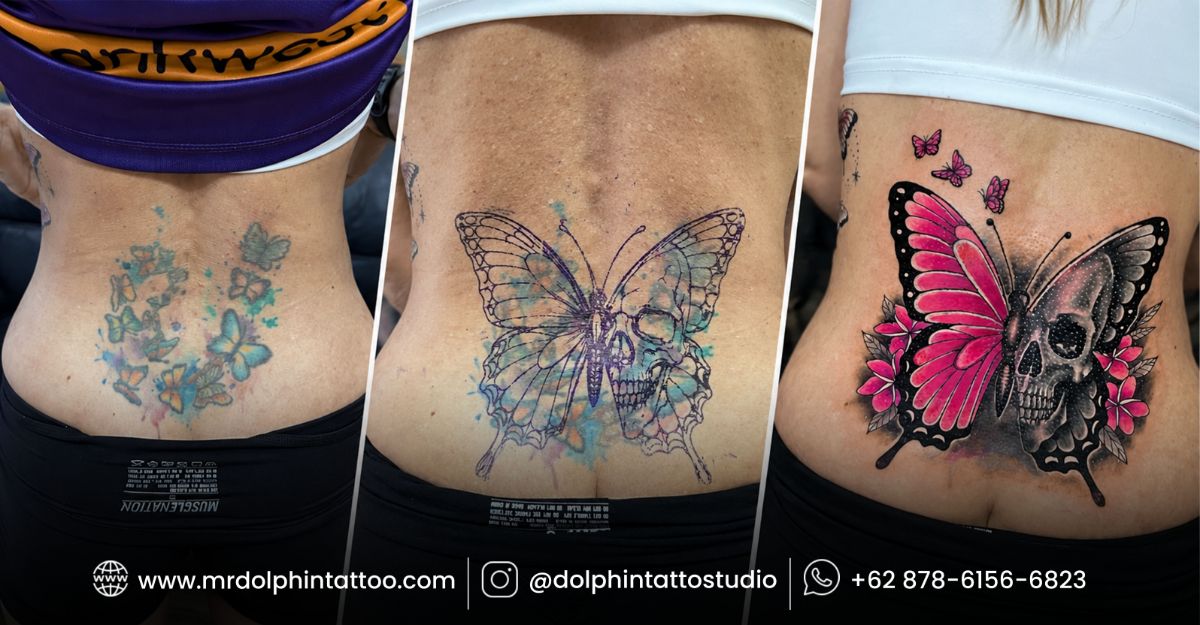
A cover-up begins with a limitation that a new tattoo does not have:
existing pigment.
The artist cannot approach the skin as though nothing is already there.
The old tattoo’s darkness, shape, size, location and existing details can all affect the new design.
For this reason, choosing an artist for a cover-up should involve looking specifically at relevant cover-up work.
A portfolio of beautiful new tattoos does not automatically demonstrate how someone approaches existing artwork.
If you are considering changing an old tattoo, our guide to cover-up tattoos in Bali explains why assessment and design strategy matter before deciding what the new tattoo should become.
Choosing an Artist for Color and Watercolor Tattoos
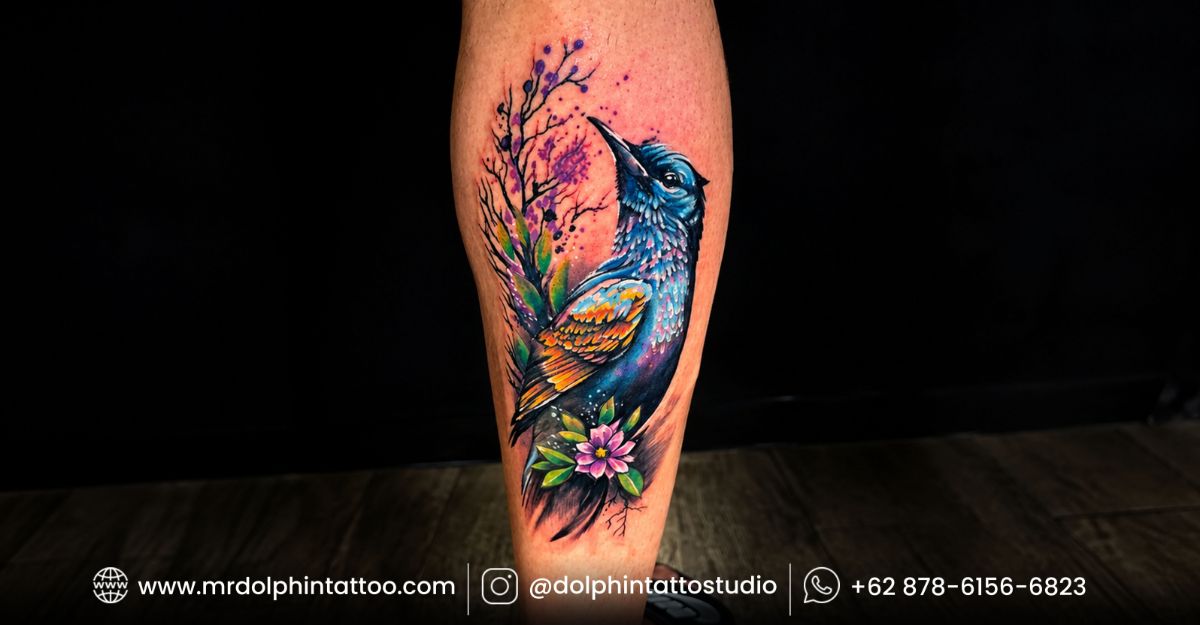
Colour introduces another set of design decisions.
The artist needs to consider how colours interact within the composition and what role they play in the artwork.
For some tattoos, colour creates bold contrast.
In others, it may be more controlled.
Watercolor-inspired work can introduce another direction through painterly transitions, splashes or flowing effects.
At MR Dolphin Tattoo in Kuta, Junk Juz works with color, watercolor and cover-up tattoo styles.
If your idea falls within those areas, reviewing relevant work and discussing your references with Junk Juz can help determine whether the artistic approach fits the project.
The important point is not simply that an artist “does color.”
Look at how they use it.
What About Fine Line Tattoos?
Fine line work creates a different set of visual considerations.
Clients are often attracted to the delicate appearance of fine line tattoos, particularly for smaller symbols, botanical designs, lettering or understated artwork.
If that is your preferred direction, examine relevant examples rather than assuming that every tattoo portfolio represents the same type of linework.
Our fine line tattoo in Bali guide explores the style in more detail.
Again, the principle is the same:
Choose the artist based on the work you want to create.
Should You Choose the Artist Before Finalizing the Design?
Often, yes.
You do not necessarily need a finished design before contacting an artist.
In fact, arriving with a rigid final drawing can sometimes limit the opportunity to adapt the concept to your body and chosen placement.
A more useful starting point may be:
idea + references + preferred style + placement + approximate size.
The artist can then discuss how those elements might work together.
This is particularly useful for custom tattoos, where the design develops through collaboration rather than being selected from a catalogue.
Does Placement Affect Which Artist You Should Choose?
Placement can matter because a tattoo is designed for a three-dimensional body.
The available space, direction of the body and movement of the area can influence composition.
For straightforward concepts, placement may not dramatically change your artist search.
For larger or more complex work, however, it can be useful to examine how an artist handles tattoos on comparable areas of the body.
Look at how the artwork follows the available space.
Does it appear naturally positioned?
Does the composition work with the body rather than looking like a flat image placed on top of it?
These details can become more important as the scale and complexity of the tattoo increase.
What If This Is Your First Tattoo?
Choosing an artist can feel more difficult when you have never been tattooed before.
You may not know what questions to ask or which details matter.
Start with the basics.
Find an artist whose work is relevant to your idea.
Bring references.
Explain that this is your first tattoo.
Ask about the design, placement, appointment and what you should expect afterward.
Our first tattoo in Bali guide covers the wider first-time experience, from preparing for the appointment to understanding aftercare.
You do not need to know everything before contacting a studio.
That is one reason consultation exists.
Artist Selection and Studio Selection Are Not the Same Thing
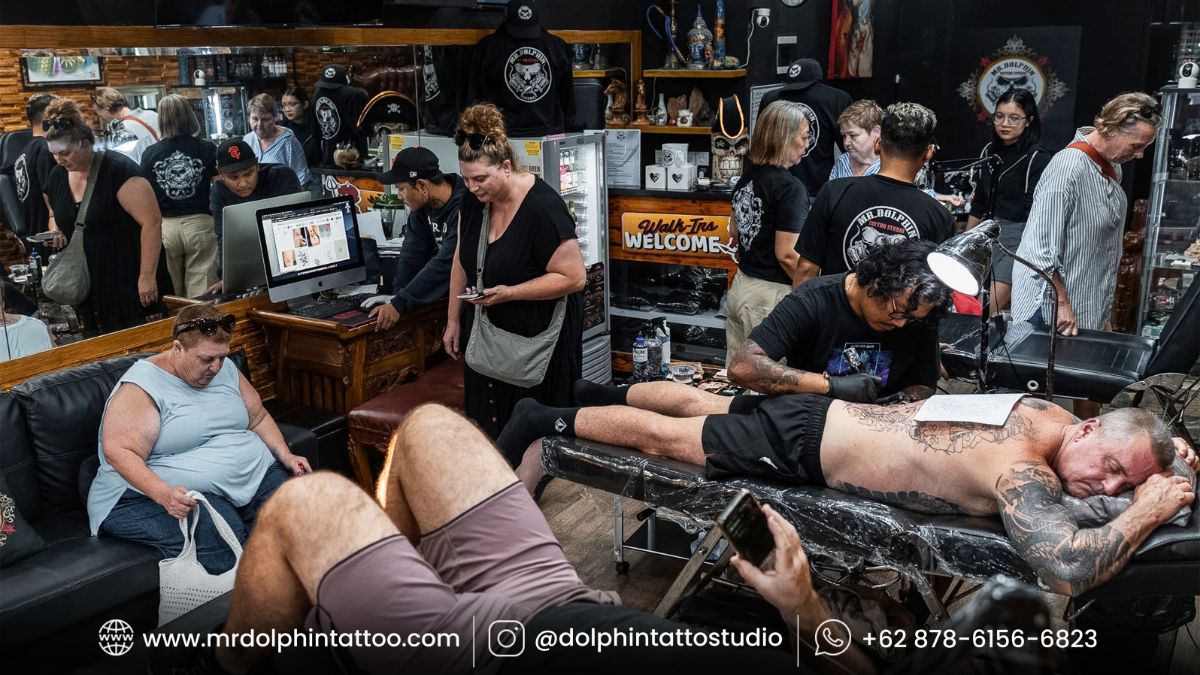
The artist and the studio are closely connected, but they are not the same decision.
When evaluating an artist, you are primarily asking:
“Is this person’s work appropriate for my tattoo?”
When evaluating a studio, additional considerations can include professional practices, hygiene, environment and how the overall tattoo process is managed.
Both matter.
But combining every consideration into one checklist can make it difficult to understand what you are actually evaluating.
First identify whether the artist’s work fits your idea.
Then make sure the studio itself meets the standards you expect.
If you are evaluating the tattoo environment, our guide to tattoo hygiene standards in Bali explains practical points to consider before booking.
Why Consultation Is More Valuable Than Guessing Online
Online research can narrow your options.
A consultation can answer questions that a portfolio cannot.
Your tattoo is specific.
The artist needs to see or understand:
- your references;
- intended size;
- placement;
- existing tattoos if relevant;
- design complexity;
- and what you want the finished piece to communicate.
That information can change the direction of a project.
Perhaps the artist recommends a different scale.
Maybe several references need to be simplified.
A placement might benefit from a different orientation.
Or the artist may suggest another design approach that better supports your idea.
Those discussions are difficult to resolve through portfolio browsing alone.
Choosing a Tattoo Artist at MR Dolphin Tattoo in Kuta
MR Dolphin Tattoo has been part of Kuta’s tattoo scene since 1975.
When you contact the studio, the conversation does not need to begin with:
“Which artist is the best?”
A more useful starting point is your tattoo idea.
Share:
- what you want;
- your preferred style;
- reference images;
- approximate size;
- placement;
- whether the tattoo is new or a cover-up;
- and any other details that matter to the concept.
This gives the studio useful context for discussing the project and artist fit.
For projects involving color, watercolor or cover-up work, Junk Juz is particularly relevant because those are established areas of his work at MR Dolphin Tattoo.
For other tattoo directions, the same principle applies: start with the project and evaluate the artist based on relevant work.
Frequently Asked Questions About Choosing a Tattoo Artist in Bali
Start with the tattoo you want and look for artists whose portfolios contain relevant work. Compare style, composition and similar projects, then discuss your idea through consultation before making the final decision.
Style is an important consideration, particularly when your design depends on a specific artistic approach. Look for repeated portfolio evidence rather than relying on a general statement that an artist can work in every style.
There is no required number. Compare enough relevant portfolios to understand your options, but focus on quality of fit rather than trying to create an unnecessarily large shortlist.
Healed examples can provide useful additional context when available. If seeing healed work is important to your decision, ask whether the artist or studio has relevant examples.
Yes. Reference images can help explain the style, composition, colors or details you like. They are most useful as communication tools rather than designs that must be copied exactly.
Price can be part of the decision, but it should not be the only factor. Consider the artist’s relevant work, the design, project complexity and how well the artist’s approach matches your tattoo idea.
No. An idea, references, preferred style, approximate size and placement can be enough to begin a consultation. The design can then be developed around the individual project.
Start by sharing your tattoo idea, references, style, size and placement with the studio. Relevant portfolio work and consultation can then help determine the appropriate artist-project match. For color, watercolor and cover-up projects, Junk Juz works specifically in those areas at MR Dolphin Tattoo.
Choose the Artist for the Tattoo, Not the Tattoo for the Artist

Finding the right tattoo artist in Bali does not require discovering one person who is supposedly better than everyone else.
It requires understanding your own project.
Start with the tattoo.
Define the subject, style, placement and meaning as clearly as you can.
Then look for evidence that an artist’s work aligns with those requirements.
Use portfolios to narrow your options.
Use references to communicate.
And use consultation to determine whether your idea and the artist’s approach work well together.
At MR Dolphin Tattoo in Kuta, you can begin that process by sharing your tattoo idea rather than trying to choose an artist based on a name alone.
Tell us the style, size, placement and references you have in mind.
Talk to an Artist About Your Tattoo
Or Visit MR Dolphin Tattoo in Kuta to discuss your project.